
Does United Airlines Board From Front To Back?
- Kamrun majide
- Jan 20, 2022
- 4 min read

Updated: Jan 23, 2022
When the epidemic initially struck, the travel industry's apparently impregnable practices evolved to suit the new safety concerns of travellers and staff.
Airlines, in particular, have reduced plane capacity, blocked middle seats, cut changing costs, and done other things. As the globe returns to some sense of routine, many airlines are reverting to their pre-pandemic protocols as well.
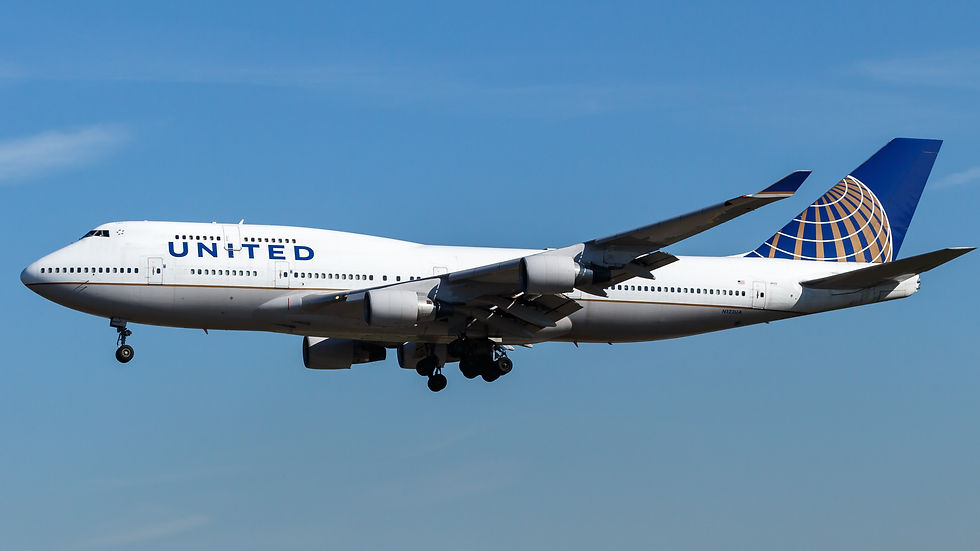
United Airlines is the most recent airline to make such a change. As of April 15, 2021, the airline has declared that its flights would no longer board from back to front. Instead, United's Better Boarding technique, which is described as a five-group, two-lane boarding system, will be used.
In a statement sent by Travel + Leisure, a United Airlines spokesman said, "Last year, United briefly moved to boarding from the back of the aircraft to the front to promote social separation.
People may gather in the gate area near the boarding entrance to wait for their row to be called now that more customers are returning. Back-to-front boarding's goal of social distance is defeated by this gathering."
United Airlines Will No Longer Board Planes From Back to Front
When the epidemic initially struck, the travel industry's apparently impregnable practices evolved to suit the new safety concerns of travelers and staff. Airlines, in particular, have reduced plane capacity, blocked middle seats, cut changing costs, and done other things. As the globe returns to some sense of routine, many airlines are reverting to their pre-pandemic protocols as well.
United Airlines is the most recent airline to make such a shift. As of April 15, 2021, the airline has declared that its flights would no longer board from back to front. Instead, United's Better Boarding approach, which is defined as a five-group, two-lane boarding system, will be used.
In a statement sent by Travel + Leisure, a United Airlines spokesman said, "Last year, United briefly moved to boarding from the back of the aircraft to the front to promote social separation.
People may gather in the gate area near the boarding entrance to wait for their row to be called now that more customers are returning. Back-to-front boarding's goal of social distance is defeated by this gathering. This modification, according to King, does not come at the price of passenger safety.
Related: Does United Airlines Assign Seats?
Groups will be summoned one at a time and funneled through two lanes to have their tickets scanned as part of the Better Boarding procedure. Passengers may use the United app or opt in for text messages to be notified when boarding has started, avoiding the need to queue at the gate.
"We know from previous polls that a smooth boarding experience is one of our customers' top priorities," King said, explaining why the business opted to go back to its old boarding procedures.
Airlines who boarded planes back-to-front in response to COVID-19 actually doubled passengers' risk of exposure
During the epidemic, airlines including as Delta, JetBlue, and United briefly shifted to back-to-front plane boarding to reduce unnecessary close contact between passengers. However, according to a new study, this strategy of filling aisles one at a time from the back might increase your chances of getting exposed to COVID-19 when compared to random boarding.
According to a research published in the Royal Society Open Science journal on Wednesday, using middle seats and allowing passengers to put luggage in overhead bins increases the risk of COVID-19 exposure.
Scientists from West Florida and Arizona State University in the United States simulated different boarding methods to see how often people came into close touch with other passengers. The study was initially reported on by Bloomberg.
Airlines established back-to-front boarding, according to the scientists, so that passengers could avoid passing by passengers in other rows when taking their seats.
Back-to-front boarding, on the other hand, increased the amount of touch between pairs of sitting passengers and pairs of passengers in the aisle, according to the study.
According to the researchers, airlines may have had a 50% reduced chance of infection if they had kept to their pre-COVID-19 boarding procedures, which normally allowed business class customers to board first, followed by economy class passengers, with passengers separated into various zones.
"Our findings imply that the new boarding procedures increase the probability of COVID-19 exposure when compared to previous processes and are significantly worse than a random boarding approach," the researchers concluded.
The researchers also claim that prohibiting the use of overhead bins to put luggage reduced exposure "substantially." This is due to the fact that passengers frequently congregate in the aisles while waiting for other passengers to stow their bags.
The paper also said that keeping middle seats unoccupied lowered the danger of exposure, reflecting a recent CDC analysis that stated that barring middle seats on flights might limit COVID-19 transmission by up to 57 percent.
The only major US airline that currently blocks middle seats is Delta, which has said that it would stop doing so on May 1. Following the CDC's study, the trade group Airlines for America told Insider's Thomas Pallini that it would not suggest any changes.


Comments